
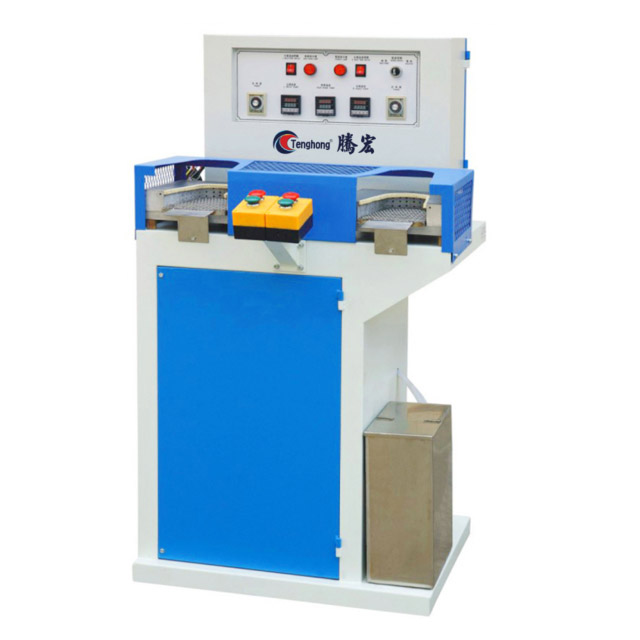
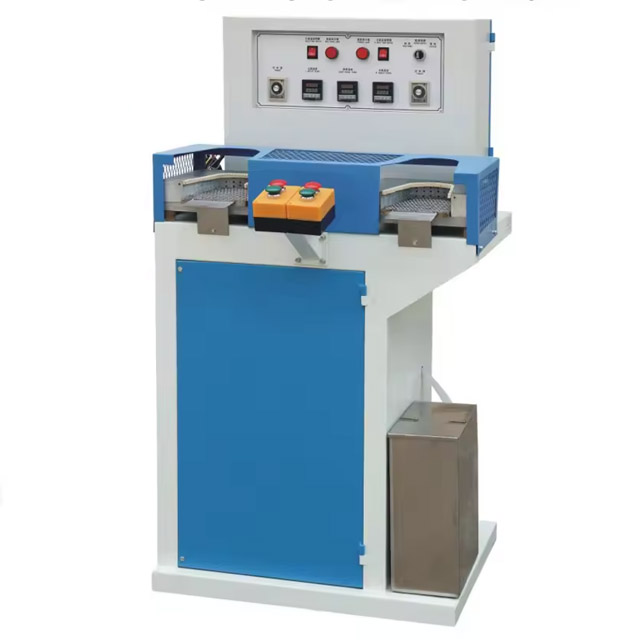
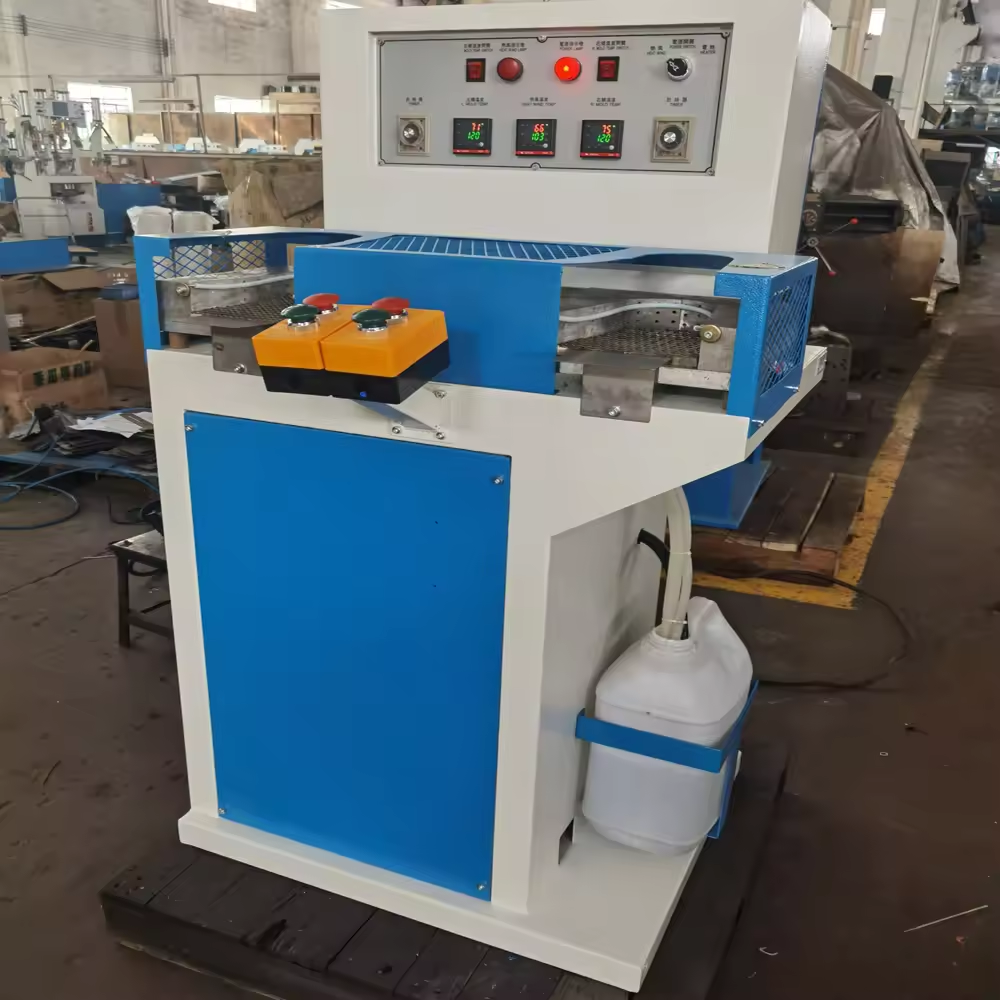
The TH-211 Heel Seat Steaming Machine is designed for footwear manufacturers who need reliable, repeatable steam processing at the heel seat station. The TH-211 Heel Seat Steaming Machine combines two critical operations into a single processing cycle: hot melt adhesive fusion and leather steam softening, completed in one step without manual repositioning.
This heel seat steaming machine is rated at 10 kW on a 380V supply, delivering output of up to 1,500 pairs per 8-hour shift — a practical fit for mid-to-high-volume shoe upper assembly lines.
| Model | TH-211 |
| Dimension | L82 × W52 × H145 cm |
| Weight | 120 kg |
| Voltage | 380V |
| Power | 10 kW |
| Production Capacity | 1,500 pairs / 8 hours |
All specification values for this heel seat steaming machine are sourced from the product data sheet. Buyers should confirm 380V three-phase supply availability at their factory before commissioning this heel seat steaming machine.
The heel seat steaming machine sits at the intersection of two quality-critical operations: adhesive bonding and material forming. The TH-211 Heel Seat Steaming Machine addresses both within a single station cycle.
The TH-211 Heel Seat Steaming Machine handles the fusion of hot melt adhesive or hot melt adhesive tape with shoe uppers and linings in the same operating cycle. The steam chamber — that is, the pressurized forming zone where heat and moisture meet the upper assembly — activates the adhesive layer and simultaneously presses the materials together. This heel seat steaming machine eliminates the need for a separate reactivation oven step at the heel seat position, reducing station count and handling time per pair.
It seems logical that higher steam pressure would mean better adhesive activation on a heel seat steaming machine — but in practice, exceeding the optimal threshold on thin synthetic linings causes delamination of the bond layer and surface bubbling rather than firmer forming. The TH-211 Heel Seat Steaming Machine is calibrated to deliver effective activation without requiring operators to push parameters beyond safe limits.
For factories processing genuine leather uppers, the heel seat steaming machine applies steam to soften material at the heel seat area while completing the adhesive fusion cycle. The TH-211 Heel Seat Steaming Machine accommodates both leather and synthetic upper types — from PU/PVC to full-grain leather — without requiring a machine changeover between styles. Leather has different heat tolerance and moisture absorption characteristics than synthetics; this heel seat steaming machine handles both material types in the same production environment.
The TH-211 Heel Seat Steaming Machine is confirmed compatible with PVC-coated materials and thick PU uppers. Factories producing multi-material lines — mixing leather dress shoes with synthetic or casual styles — can run this heel seat steaming machine across those upper types without separate equipment for each material category.
At L82 × W52 cm floor footprint and 120 kg, the TH-211 Heel Seat Steaming Machine integrates into existing lasting and upper assembly lines without major floor reconfiguration. The 145 cm height is standard for operator-accessible heel seat steaming machine equipment at standing work height.
The TH-211 Heel Seat Steaming Machine delivers a rated capacity of 1,500 pairs per 8-hour shift — approximately 187 pairs per hour under standard operating conditions. Actual throughput from this heel seat steaming machine depends on upper complexity, mold changeover frequency, and operator pacing.
Skipping mold pre-heat time is a common floor-level decision that quietly drives up first-piece rejection rates on any heel seat steaming machine — especially during cold-start when the forming zone is 15–20°C below steady-state. Building a consistent pre-heat routine protects yield from the first pair forward.
The TH-211 Heel Seat Steaming Machine is designed for the heel seat station in cemented shoe construction, where the heel counter liner and upper material must be bonded and shaped simultaneously. Heat-activated adhesive bonding has strict temperature and timing parameters — if a heel seat steaming machine delivers inconsistent temperature, adhesive activation becomes variable, leading to delamination or sole separation defects. The TH-211 operates at a fixed, repeatable cycle that keeps bonding parameters consistent across a production run.
Factories producing leather dress shoes and synthetic or PVC-coated styles benefit from the TH-211 Heel Seat Steaming Machine's material compatibility range. Operators can process leather, PU, and PVC-coated uppers through the same heel seat steaming machine station, reducing station overhead and simplifying scheduling.
The TH-211 Heel Seat Steaming Machine handles hot melt adhesive tape fusion between outer upper materials and inner lining layers. Consistent heel seat steaming machine cycles reduce the risk of lining separation during customer wear — a warranty defect that increases return rates in premium footwear segments.
The TH-211 Heel Seat Steaming Machine is manufactured by Guangdong Tenghong Machinery Technology Co., Ltd., a specialist in footwear production equipment. Tenghong's product line covers lasting machines, shoe molding machines, sole attaching machines, leather cutting machines, and steam forming equipment. Tenghong focuses on deep specialization in steam forming technology — with ongoing refinement of heat and moisture control parameters for shoe upper production.
Buyers evaluating the TH-211 Heel Seat Steaming Machine against alternatives should confirm mold compatibility with their existing last sizes before purchase — mold procurement and storage are a binding constraint on how many styles a factory can process through this heel seat steaming machine. For procurement inquiries about this heel seat steaming machine, including configuration options and shipping logistics, contact the Tenghong sales team directly.

 EN
EN
